STEMSIT
STEM Social Issue Topics

STEMSIT
BRAIN
BODY PART
ENJOY
COME
READ
LEARN NEW
ACCURATE INFORMATION
DISCOVER MORE ABOUT
YOUR BODY
GAIN KNOWLEDGE
FACTS
BRAIN
The brain is housed inside the bony covering called the cranium. They are the central nervous system.

BRAIN

Purpose
The brain is a complex organ that controls thought, memory, emotion, touch, motor skills, vision, breathing, temperature, hunger and every process that regulates our body.

Function
It controls our ability to balance, walk, talk, and eat. It coordinates and regulates our breathing, blood circulation, and heart rate. It is responsible for our ability to speak, to process and remember information, make decisions, and feel emotions.
PARTS OF THE BRAIN

The Nervous System has 3 main parts;
1
Brain
The brain is the most complex part of the human body. This three-pound organ is the seat of intelligence, interpreter of the senses, initiator of body movement, and controller of behavior. Lying in its bony shell and washed by protective fluid, the brain is the source of all the qualities that define our humanity. The brain is the crown jewel of the human body.
Brain is made up of 3 main parts;
1
The Forebrain
The parts of the forebrain are responsible for sensory functions, voluntary motor skills, speech, and critical thinking. It also controls homeostasis which is maintained through regulation of body temperature, blood pressure, pleasure, pain, hunger, and thirst as well as hormone production.
3
The Hindbrain
The hindbrain is responsible for muscular movement, respiratory rhythm, heart rate, blood pressure, sleep, and staying alert while awake. Involuntary reflexes like sneezing and swallowing are also controlled by the parts of the hindbrain.
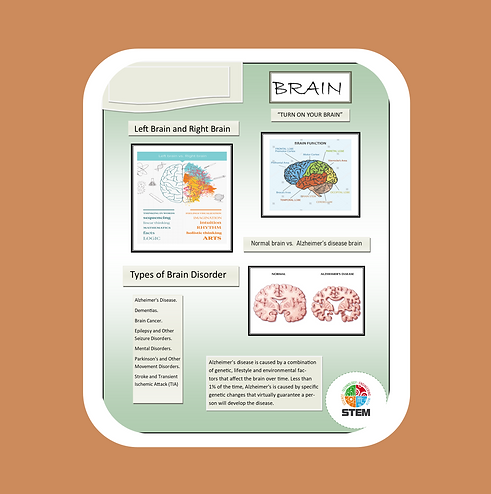
Possible Brain Disorders
Epilepsy and Other Seizure Disorders
Epilepsy, which is sometimes called a seizure disorder, is a disorder of the brain. A person is diagnosed with epilepsy when they have had two or more seizures. A seizure is a short change in normal brain activity. Seizures are the main sign of epilepsy. Some seizures can look like staring spells.
Mental Disorders
A mental disorder is characterized by a clinically significant disturbance in an individual's cognition, emotional regulation, or behaviour. It is usually associated with distress or impairment in important areas of functioning.
Parkinson's and Other Movement Disorders
Parkinson disease (PD) is a degenerative condition of the brain associated with motor symptoms (slow movement, tremor, rigidity and imbalance) and other complications including cognitive impairment, mental health disorders, sleep disorders and pain and sensory disturbances.
The Most Common Brain Diseases
Dementias
Dementia is the loss of cognitive functioning — thinking, remembering, and reasoning — to such an extent that it interferes with a person's daily life and activities. Some people with dementia cannot control their emotions, and their personalities may change. Dementia ranges in severity from the mildest stage, when it is just beginning to affect a person's functioning, to the most severe stage, when the person must depend completely on others for basic activities of living.
Stroke and Transient Ischemic Attack (TIA)
a stroke that lasts only a few minutes. It happens when the blood supply to part of the brain is briefly blocked. Symptoms of a TIA are like other stroke symptoms, but do not last as long. They happen suddenly, and include: Numbness or weakness, especially on one side of the body.
Take Care of your Brain

Get plenty of sleep.
Sleep plays an important role in your brain health. There are some theories that sleep helps clear abnormal proteins in your brain and consolidates memories, which boosts your overall memory and brain health.
How Does Exercise Improve the Brain?
The Benefits of Exercise
Physical activity can improve your cognitive health—helping you think, learn, problem-solve, and enjoy an emotional balance. It can improve memory and reduce anxiety or depression. But you don't have to be a fitness guru to reap the benefits. Any amount of physical activity can help.
Helping you think, learn, problem-solve, and enjoy an emotional balance. It can improve memory and reduce anxiety or depression.
Exercising with mental Disorder
How can I keep my Nervous system heathy?
Regular exercise may help ease depression and anxiety by: Releasing feel-good endorphins, natural cannabis-like brain chemicals (endogenous cannabinoids) and other natural brain chemicals that can enhance your sense of well-being.
-
Step 1: Exercise on a daily basis. ...
-
Step 2: Get plenty of sleep. ...
-
Step 3: Expose your body to sunlight. ...
-
Step 4: Add meditation in your daily routine. ...
-
Step 5: Walk barefoot. ...
-
Step 6: Drink green tea. ...
-
Step 7: Food you eat matters.
When should I call a healthcare provider about an issue with my nervous system?
Call your doctor if you have any of these neurological symptoms: Severe headaches or migraines. Chronic lower back or neck pain. Seizures or tremors.