STEMSIT
STEM Social Issue Topics

STEMSIT
SKIN
BODY PART
ENJOY
COME
READ
LEARN NEW
ACCURATE INFORMATION
DISCOVER MORE ABOUT
YOUR BODY
GAIN KNOWLEDGE
FACTS
SKIN
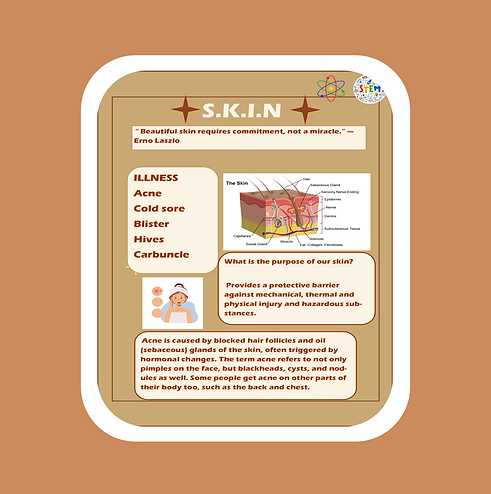
Your skin acts as a barrier to our internal systems that are imperative to our health and well-being.
Skin
The skin is the largest organ of the body, with a total area of about 20 square feet. The skin protects us from microbes and the elements, helps regulate body temperature, and permits the sensations of touch, heat, and cold.

Purpose
-
Provides a protective barrier against mechanical, thermal and physical injury and hazardous substances.
-
Prevents loss of moisture.
-
Reduces harmful effects of UV radiation.
-
Acts as a sensory organ (touch, detects temperature).
-
Helps regulate temperature.
-
An immune organ to detect infections etc.
-
Production of vitamin D.

Function
The primary function of the skin is to act as a barrier. The skin provides protection from: mechanical impacts and pressure, variations in temperature, micro-organisms, radiation and chemicals.
PART OF THE SKIN
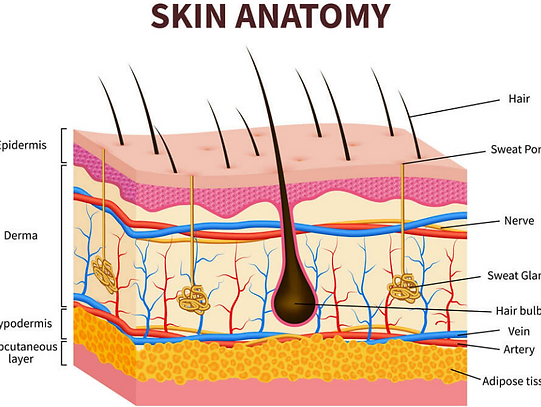
The Layers Of Skin
1
Epidermis
Your epidermis is the outermost layer of skin on your body. It protects your body from harm, keeps your body hydrated, produces new skin cells and contains melanin, which determines the color of your skin. The epidermis is the thinnest layer of skin, but it’s responsible for protecting you from the outside world, and it’s composed of five layers of its own.
3
Hypodermis
The hypodermis is the bottom layer of skin in your body. It has many important functions, including storing energy, connecting the dermis layer of your skin to your muscles and bones, insulating your body and protecting your body from harm. As you age, your hypodermis decreases in size, and your skin starts to sag.
Rare Diseases
Harlequin ichthyosis
is a severe genetic disorder that affects the skin. Infants with this condition are born prematurely with very hard, thick skin covering most of their bodies. The skin forms large, diamond-shaped plates that are separated by deep cracks (fissures). These skin abnormalities affect the shape of the eyelids, nose, mouth, and ears, and limit movement of the arms and legs. Restricted movement of the chest can lead to breathing difficulties and respiratory failure in babies with harlequin ichthyosis. Affected infants also have feeding problems.
Actinic prurigo (AP)
Actinic Prurigo is a skin problem caused by sunlight exposure. It is usually worse in the summer months, but can occur in winter. Sensitivity to the ultraviolet rays from the sun can be severe, with as little as 5 minutes of sunlight exposure causing a problem. The initial rash, which tends to start a few hours after sunlight exposure is made up of multiple red spots and blisters. These often scab, and go on to form lumps (prurigo nodules) that can last for months and leave scars. Many also develop patches of eczema (redness, flaking and sometimes skin thickening)
Peeling skin syndrome
Peeling skin syndrome (PSS) is a group of rare inherited skin disorders in which the normal gradual process of invisible shedding of the outermost skin layers is hastened and/or aggravated. PSS is characterized by painless, continual, spontaneous skin peeling (exfoliation) due to a separation of the outermost layer of the epidermis (stratum corneum) from the underlying layers. Other findings may include blistering and/or reddening of the skin (erythema) and itching (pruritus).
The Most Common Skin Diseases
Acne (Acne vulgaris)
Acne is caused by blocked hair follicles and oil (sebaceous) glands of the skin, often triggered by hormonal changes. The term acne refers to not only pimples on the face, but blackheads, cysts, and nodules as well. Some people get acne on other parts of their body too, such as the back and chest
Atopic dermatitis (Eczema)
Atopic dermatitis (eczema) is a condition that causes dry, itchy and inflamed skin. It's common in young children but can occur at any age. Atopic dermatitis is long lasting (chronic) and tends to flare sometimes. It can be irritating but it's not contagious.
People with atopic dermatitis are at risk of developing food allergies, hay fever and asthma.
Hives
Hives are usually caused by an allergic reaction to something that you have encountered or swallowed. When you have an allergic reaction, your body begins to release histamines into your blood. Histamines are chemicals your body produces in an attempt to defend itself against infection and other outside intruders. Unfortunately, in some people, the histamines can cause swelling, itching, and many of the symptoms that are experienced with hives.
Pulmonary Edema
Sunburn is skin damage from too much exposure to the sun’s ultraviolet (UV) rays. UV light from artificial sources such as tanning beds can also burn your skin. A sunburn is actually a radiation burn to your skin.
Multiple sunburns can lead to premature skin aging and skin cancer. Skin cancer is the most common type of cancer in the U.S.
Diaper Rash
is a common form of irritated skin (dermatitis) that looks like patches of inflamed skin on your baby's bottom. It's often related to wet or infrequently changed diapers, skin sensitivity, and chafing. It usually affects babies, though anyone who wears a diaper regularly can develop the condition.
Shingles (Herpes Zoster)
Shingles (herpes zoster) is a viral infection that causes an outbreak of a painful rash or blisters on the skin. It's caused by the varicella-zoster virus, which is the same virus that causes chickenpox. The rash most often appears as a band of rashes or blisters in one area of your body.
Contact dermatitis
Contact dermatitis is an itchy rash caused by direct contact with a substance or an allergic reaction to it. The rash isn't contagious, but it can be very uncomfortable.
Many substances can cause this reaction, such as cosmetics, fragrances, jewelry and plants. The rash often shows up within days of exposure.
Rosacea
is a common skin condition that causes blushing or flushing and visible blood vessels in your face. It may also produce small, pus-filled bumps. These signs and symptoms may flare up for weeks to months and then go away for a while. Rosacea can be mistaken for acne, other skin problems or natural ruddiness.
Rosacea can affect anyone. But it's most common in middle-aged white women. There's no cure for rosacea, but treatment can control and reduce the signs and symptoms.
Keep Your Skin Healthy

People say that beauty’s only skin deep; it’s what’s on the “inside” that counts. Our insides are certainly important, but skin is your first layer of defense against the outside world. Skin can also give important clues to your overall health. Learn to take good care of your skin, so your skin can keep taking good care of you.
How can I keep my skin healthy?
the benefit of taking care of your skin
-
Wash up. Bathe in warm—not hot—water; use mild cleansers that don’t irritate; and wash
gently—don’t scrub. -
Block sun damage. Avoid intense sun exposure, use sunscreen, and wear protective clothing.
-
Don’t use tanning beds or sunlamps. They emit the same harmful UV radiation as the sun.
-
Avoid dry skin. Drink plenty of water, and use gentle moisturizers, lotions, or creams.
-
Reduce stress. Stress can harm your skin and other body systems.
-
Get enough sleep. Experts recommend about 9 hours a night for teens and 7-8 hours for adults.
-
Speak up. Talk to your doctor if you notice any odd changes to your skin, like a rash or mole that changes size or color.
It helps your skin stay in good condition: You’re shedding skin cells throughout the day, so it’s important to keep your skin glowing and in good condition. An effective routine can help prevent acne, treat wrinkles, and help keep your skin looking its best.
When should I call a healthcare provider about an issue with my skin?
Call Your Doctor If:
-
Home treatment doesn’t help or the itch lasts more than a couple of weeks.
-
The itch comes on suddenly and is all over your body. You could have an allergic reaction or an illness like thyroid problems or liver disease.
-
You also have a fever or feel tired.
-
The itch keeps you awake or makes it hard to go about your day.
STAY HEALTHY
CITATIONS:
What is skin?
https://www.webmd.com/skin-problems-and-treatments/picture-of-the-skin
Purpose of the skin
https://www.hse.gov.uk/skin/professional/causes/structure.htm
Function of the skin
https://www.clinimed.co.uk/wound-care/wound-essentials/structure-and-function-of-the-skin
skin pictures
https://cdn4.vectorstock.com/i/1000x1000/09/43/wink-skin-character-cartoon-style-vector-20510943.jpg
https://www.colorescience.com/blogs/blog/importance-skin-care
Harlequin ichthyosis
Actinic prurigo (AP)
peeling skin syndrome
https://rarediseases.org/rare-diseases/peeling-skin-syndrome/
dr. belo picture
https://images.prestigeonline.com/wp-content/uploads/2019/02/25095953/Dr-Belo2.jpg
keeping your skin healthy
https://newsinhealth.nih.gov/2015/11/keep-your-skin-healthy
skin care
When should I call a doctor?
layers of skin
https://www.cancer.gov/publications/dictionaries/cancer-terms/def/dermis
Common diseases
https://www.drugs.com/slideshow/most-common-skin-conditions-1086
https://www.mayoclinic.org/diseases-conditions/atopic-dermatitis-eczema/symptoms-causes/syc-20353273
https://www.healthline.com/health/hives#causes
https://my.clevelandclinic.org/health/diseases/21858-sunburn
https://www.mayoclinic.org/diseases-conditions/diaper-rash/symptoms-causes/syc-20371636
https://my.clevelandclinic.org/health/diseases/11036-shingles