STEMSIT
STEM Social Issue Topics

STEMSIT
MUSCLE
BODY PART
ENJOY
COME
READ
LEARN NEW
ACCURATE INFORMATION
DISCOVER MORE ABOUT
YOUR BODY
GAIN KNOWLEDGE
FACTS

MUSCLE

Muscle
Muscles are soft tissues. Many stretchy fibers make up your muscles. You have more than 600 muscles in your body. Different types of muscles have different jobs. Some muscles help you run, jump or perform delicate tasks like threading a needle.

Function
Their predominant function is contractibility. Muscles, attached to bones or internal organs and blood vessels, are responsible for movement. Nearly all movement in the body is the result of muscle contraction.

Purpose
The muscular system consists of various types of muscle that each play a crucial role in the function of the body. Muscles allow a person to move, speak, and chew.
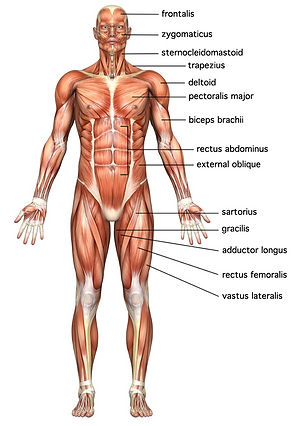
PARTS OF THE MUSCLES
3
Trapezius
The trapezius is one of the broadest and most superficial (closest to the skin) muscles of the upper back and trunk, meaning upon dissection of a cadaver it is often used as a landmark because it is encountered first. This muscle is triangular, broad, and thin and covers the upper back of the shoulders and neck.
4
Deltoid
Your deltoid muscles are in your shoulder, which is the ball-and-socket joint that connects your arm to the trunk of your body. Deltoid muscles help you move your arms in different directions. They also protect and stabilize your shoulder joint. Like most other muscles in your body, the deltoids are skeletal muscles
5
Gracillis
The gracilis is a long, thin muscle located in the medial compartment of the thigh. It originates on the medial aspect of the ischiopubic ramus and joins with the sartorius and semitendinosus muscle tendons to form the pes anserine, which inserts on the superior medial tibia, medial to the tibial tuberosity.
1
Sartorius
The sartorius is the longest muscle in the body, spanning both the hip and the knee joints. The word sartorius is derived from the Latin word sartor, which translates to patcher, or tailor, due to how the individual will position their leg while working. It is the most superficial muscle in the anterior compartment of the thigh. It travels obliquely from the anterior superior iliac spine (ASIS) to the medial side of the proximal tibia at the pes anserine. The sartorius muscle acts synergistically in concert with the other musculature of the hip, thigh, and knee.
2
Vastus Lateralis
The vastus lateralis muscle is located on the lateral side of the thigh. This muscle is the largest of the quadriceps which includes: rectus femoris, vastus intermedius, and vastus medialis. Together, the quadriceps act on the knee and hip to promote movement as well as strength and stability. The VL is enclosed by a strong fascial layer known as the fascia lata. The fascia lata thickens laterally as it blends into the iliotibial tract. The intermuscular septae that divide the thigh into anterior, medial, and lateral compartments receive their fibrous division from the deep aspect of the fascia lata.
3
Rectus Fermoralis
The rectus femoris flexes the hip along with the sartorius and iliopsoas and extends the lower leg at the knee, working in conjunction with the other three quadriceps muscles. The rectus femoris muscle antagonizes the hamstring muscles at the knee and the hip. The rectus femoris has two heads of origin: the direct (straight) head and the indirect (reflected) head. The direct head arises from the anterior aspect of the inferior iliac spine (AIIS; a common site of avulsion), while the indirect head originates from the acetabular ridge. The two heads merge to become the conjoined tendon below their origin.
Possible Diseases
Fibromyalgia
Fibromyalgia is a chronic (long-lasting) disorder that causes pain and tenderness throughout the body, as well as fatigue and trouble sleeping. Scientists do not fully understand what causes it, but people with the disorder have a heightened sensitivity to pain. There is no cure for fibromyalgia, but doctors and other health care providers can help manage and treat the symptoms. Treatment typically involves a combination of exercise or other movement therapies, psychological and behavioral therapy, and medications.
Movement Disorder
The term movement disorders refers to a group of nervous system (neurological) conditions that cause either increased movements or reduced or slow movements. These movements may be voluntary or involuntary. Common types of movement disorders include: Ataxia. In general, signs and symptoms of movement disorders include problems with physical coordination, trouble walking, episodes of uncontrolled movements (such as during a seizure), muscle weakness, twitching, or muscle spasm.
Multiple Sclerosis
The cause of multiple sclerosis is unknown. It's considered an autoimmune disease in which the body's immune system attacks its own tissues. In the case of MS , this immune system malfunction destroys the fatty substance that coats and protects nerve fibers in the brain and spinal cord (myelin). In MS, the immune system attacks the layer that surrounds and protects the nerves called the myelin sheath. This damages and scars the sheath, and potentially the underlying nerves, meaning that messages travelling along the nerves become slowed or disrupted.
Cramps
Overuse of a muscle, dehydration, muscle strain or simply holding a position for a prolonged period can cause a muscle cramp. In many cases, however, the cause isn't known. Although most muscle cramps are harmless, some may be related to an underlying medical condition, such as: Inadequate blood supply.
Muscular Dystrophy
In most cases, muscular dystrophy (MD) runs in families. It usually develops after inheriting a faulty gene from one or both parents. MD is caused by mutations (alterations) in the genes responsible for healthy muscle structure and function. There's currently no cure for muscular dystrophy (MD), but a variety of treatments can help to manage the condition.
Myasthenia Gravis
Myasthenia gravis is a chronic autoimmune, neuromuscular disease that causes weakness in the skeletal muscles that worsens after periods of activity and improves after periods of rest. These muscles are responsible for functions involving breathing and moving parts of the body, including the arms and legs.
Polymyositis
Polymyositis is an uncommon inflammatory disease that causes muscle weakness affecting both sides of your body. Having this condition can make it difficult to climb stairs, rise from a seated position, lift objects or reach overhead. Although there's no cure for polymyositis, treatment can improve your muscle strength and function.
Dermatomyositis
Dermatomyositis is a rare disease that causes muscle weakness and skin rash. Symptoms include a red or purple rash on sun exposed skin and eyelids, calcium deposits under the skin, muscle weakness, and trouble talking or swallowing. There is no cure, but treatment is done to reduce the symptoms.
Neuromuscular Diseases
Neuromuscular diseases affect the function of muscles due to problems with the nerves and muscles in your body. The most common sign of these diseases is muscle weakness. Mayo Clinic neurologists provide comprehensive evaluation of these diseases, including electrodiagnostic studies and other tests.
Keep Your Muscles Healthy

It's always important to pay attention to your body's signals, and to treat symptoms like muscle pain. Often you can do this yourself at home, but sometimes you need to see your health provider. If you have any doubt about what your muscle pain means, consult your doctor..
How Does Exercise Strengthen the Lungs?
The Benefits of Exercise
Added muscle mass will increase the definition of your muscles, improve your lean body mass, and add bulk and size to your frame in all the right places. Muscle growth takes time, persistence, and a long-term commitment to the process. While gaining large amounts of muscle may seem daunting, with proper training programs and adequate consumption of certain foods, serious muscle building is possible for most people. This article breaks down everything you need to know when it comes to building muscle, including how to work out, what to eat, and recovery protocols.
We have all heard it many times before - regular exercise is good for you, and it can help you lose weight. But if you are like many Americans, you are busy, you have a sedentary job, and you haven't yet changed your exercise habits. The good news is that it's never too late to start. You can start slowly, and find ways to fit more physical activity into your life. To get the most benefit, you should try to get the recommended amount of exercise for your age. If you can do it, the payoff is that you will feel better, help prevent or control many diseases, and likely even live longe
Exercising with mucle Disease
How can I keep my respiratory system healthy?
Low- to moderate-strength (resistance) exercises are safe for most people with muscle-wasting conditions. Avoid lifting heavy weights as this may cause damage to already vulnerable muscles, and put additional strain on surrounding ligaments and joints Exercising, getting enough rest, and eating a balanced diet will help to keep your muscles healthy for life
Exercising, getting enough rest, and eating a balanced diet will help to keep your muscles healthy for life.if pain interferes with your daily activities or how well you can function, speak with a healthcare provider. Seek immediate medical help if you have severe pain from a sudden injury
When should I call a healthcare provider about an issue with my respiratory system?
If pain interferes with your daily activities or how well you can function, speak with a healthcare provider. Seek immediate medical help if you have severe pain from a sudden injury Muscle pain, also known as myalgia, is a common health ailment that most of us experience at some point. You may overdo the crunches at the gym and wake up the next day with a sore abdomen; twist a back muscle lifting boxes; or feel achy all over a day before the flu hits. Often you can provide muscle relief at home—but sometimes the pain is a signal that you need to seek medical attention.
STAY HEALTHY
CITATIONS:
Zygomaticus
https://www.kenhub.com/en/library/anatomy/zygomaticus-major-muscle
Frontails
trapezius
https://www.ncbi.nlm.nih.gov/books/NBK518994/
deltoid
https://my.clevelandclinic.org/health/body/21875-deltoid-muscles
gracillis
Sartorius
Vastus lateralis
https://www.ncbi.nlm.nih.gov/books/NBK532309/
Rectus Fermoralis
Fibromyalgia
Movement Disorder
Multiple Sclerosis
https://www.mayoclinic.org/diseases-conditions/multiple-sclerosis/symptoms-causes/syc-20350269
cramps
Muscular Dystrophy
Myasthenia Gravis
Mysositis
Polymyositis
https://www.mayoclinic.org/diseases-conditions/polymyositis/diagnosis-treatment/drc-20353212
Dermatomyositis
Neuromuscular Diseases
Sarcopenia
https://my.clevelandclinic.org/health/diseases/23167-sarcopenia
parts of mucles